January 2026 · Lifestyle
A Day in the Life: What Homeschooling Actually Looks Like
A typical homeschool day runs 2-4 hours of focused learning — usually mornings — followed by free play, outside time, errands, and interest-led projects. It does not look like a 7-hour school day recreated at home. Here's what real families' days actually look like.
When people hear "homeschool," they usually picture a mom standing at a whiteboard in front of desks, ringing a bell, and handing out worksheets. That's not what this looks like — at all. Here's what a typical day actually looks like in our house, with four boys ranging from ages 4 to 11.
Our Typical Tuesday
7:30 AM
Morning Routine
Wake up, breakfast together as a family. No alarms, no rush. The kids help make breakfast — life skills count as school!
8:30 AM
Focused Learning Block
This is our core academic time. We tackle math and language arts when everyone's fresh. For our oldest, this means 45 minutes of math and 30 minutes of writing. For the younger ones, it's phonics and handwriting practice.
10:00 AM
Outdoor / Movement Break
We go outside — rain or shine. Bike riding, nature walks, or just running around the backyard. Sometimes this becomes an impromptu science lesson (bugs, clouds, plants).
10:30 AM
Read-Aloud & Discussion
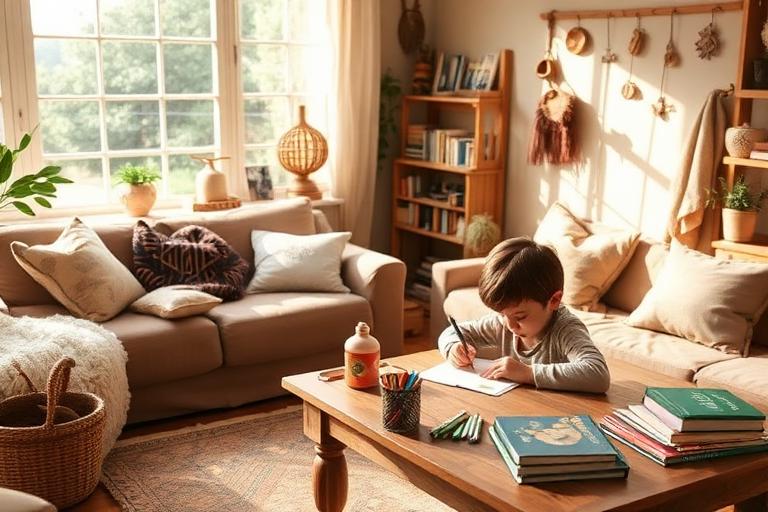
We gather on the couch and I read aloud — history, science, or a chapter book we're working through. Then we talk about what we learned. This is everyone's favorite part of the day.
11:30 AM
Lunch & Free Time
Lunch, then an hour of free time. LEGO, drawing, imaginative play. This is when the magic happens — kids process and apply what they've learned through play.
1:00 PM
Afternoon Enrichment
Art, music, science experiments, or a field trip. Tuesdays we have co-op. Thursdays we visit the library. Some days we bake and call it chemistry (it is!).
3:00 PM
Done for the Day
School is wrapped up by 3 PM at the latest — often earlier. The rest of the day is sports, friends, family time, or just being kids.
What You'll Notice
- It's shorter than you think. Actual instruction time is 3–4 hours. Without transitions, attendance, lunch lines, and crowd management, you cover more in less time.
- It's flexible. If someone's having a rough morning, we adjust. If something sparks curiosity, we follow it. There's no bell telling us to stop.
- It doesn't look like school. We learn on the couch, at the kitchen table, in the backyard, at the library, and in the car. Learning happens everywhere.
- Every family's version is different. Some families start at 6 AM. Some school four days a week. Some do year-round schooling. There's no "right" schedule — the printable workbook has blank daily rhythm pages to sketch out yours.
The Hardest Part (Let's Be Honest)
The hardest part isn't the teaching — it's the mental load. You're the teacher, the principal, the counselor, and the parent, all at the same time. Some days are beautiful. Some days are survival mode. Both are normal. The key is giving yourself grace and remembering why you started.
What About Bad Days?
Oh, they happen. Days where nobody wants to cooperate, the toddler is melting down, and you question everything. On those days? We close the books, go outside, and try again tomorrow. One bad day doesn't mean homeschooling isn't working. It means you're human.
Want Help Building Your Own Routine?
Our Starter Guide includes printable daily schedule templates, weekly planning pages, and tips for creating a rhythm that works for your unique family.
Frequently Asked Questions
Next steps for your homeschool
Ready to go deeper? Get The Homeschool Starter Guide for the complete step-by-step roadmap, or book a 1-on-1 consultation and we'll build a plan together for your family.